
Two business software products advertise the same feature: “request approval”. Both work in the demo. In your office, the approver can be away, a request can be incomplete, and some changes need an audit trail. Those details distinguish a good fit from a product that adds manual work.
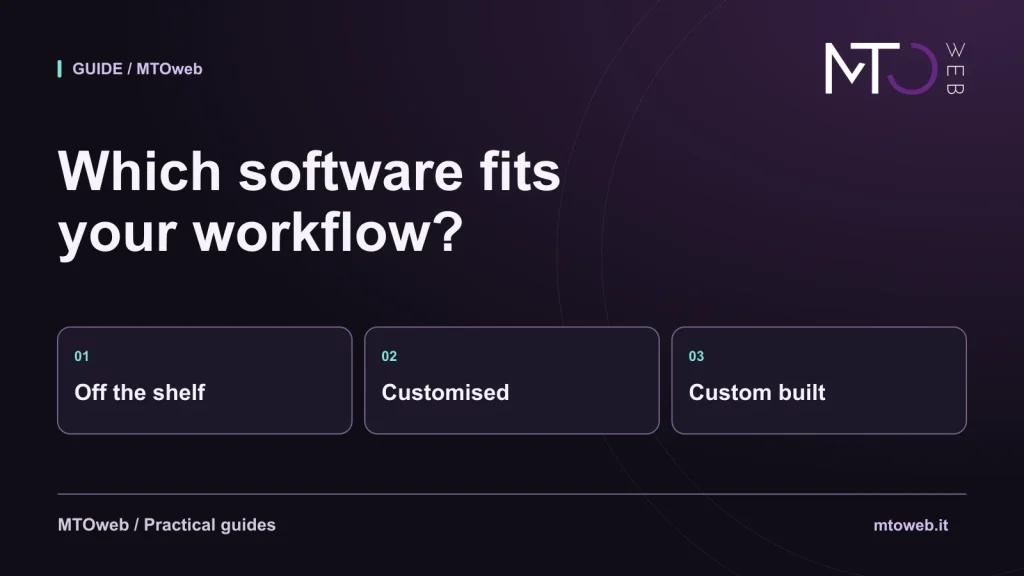
Illustrative diagram by MTOweb.
Describe a working day
Take one workflow, such as an internal purchase request. Who submits it? Who can correct or approve it? What information is needed to complete the task? Add one case that already requires an exception. Use realistic dummy data to create a scenario that every supplier can demonstrate.
When to try off-the-shelf software
Start with an existing product if its settings cover the essential steps and staff can work with the remaining differences. For an internal purchase, configuring roles and thresholds might be enough. Let the people who will use the system try it. If they have to re-enter data or maintain a parallel spreadsheet every day, include that work in the comparison.
When to customise a platform
If most of the workflow is covered, it may be enough to add what is missing: an approval rule, a connection between systems or a view for a particular role. Ask how the feature will be added and who will check it when updates come out. Changing a setting, adding an extension and modifying the product are different kinds of work, even when the demo looks identical.
When to consider custom development
Custom development becomes worth comparing when existing products force compromises on essential steps. Start with a small, testable outcome: a request comes in, goes to the right person and remains available with its history. Decide who will maintain the software after launch. A useful first version can run alongside the tools that already work.
Compare the same trial and costs
Ask every supplier to run the same scenario, including the exception. Compare setup, data migration, training, subscriptions, updates and your ability to export data if you change providers. The UK government’s technology purchasing guide recommends small trials and assessing support and integration. It is written for public bodies; the trial method can also inform a business decision.
If you are considering custom software or a web app, bring one everyday workflow and one exception. Those are two tests you can use to decide how much actually needs building.