
The DIRimè project gave us a concrete problem to solve. A member starts their payment in WordPress, while staff manage the dues in MTOsuite. We had to connect those two moments. That work led to an embeddable checkout and extended APIs that let other systems communicate with the suite.
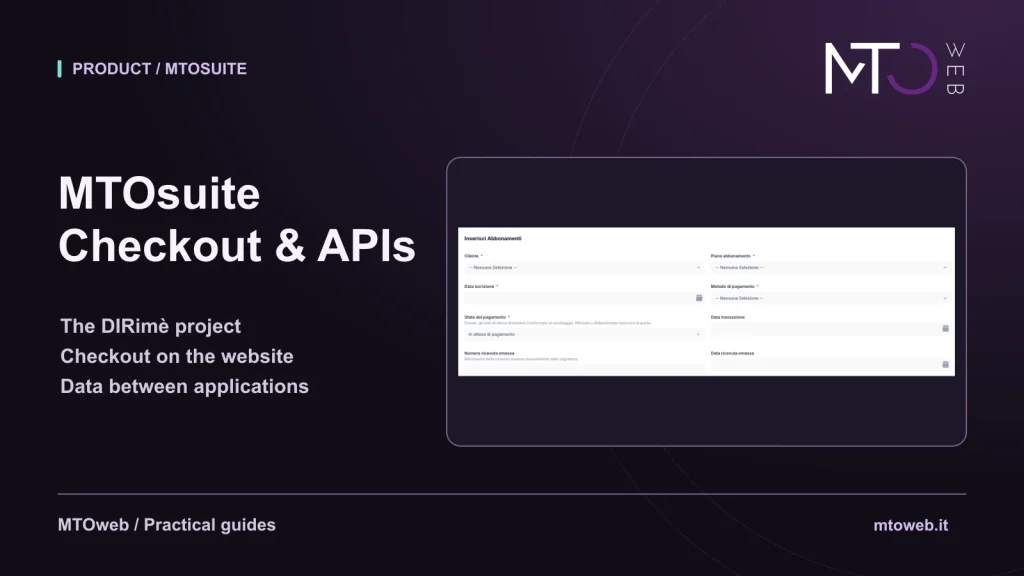
Actual DIRimè management software showing a blank membership dues form.
A renewal starts in WordPress and returns to the management system
At DIRimè, WordPress starts the journey and the management system shows the summary. The member opens PayPal to pay and returns to checkout afterwards. The screenshot above shows the other side of the process, where staff find the dues record and check its status.
What we brought into the suite
Checkout can fit into an existing site. Each project defines where the request starts, how the summary appears and where the user returns after payment. The DIRimè project helped us make that connection reusable.
What CRUD APIs are for
An authorised external system can create, read, update or delete the records covered by the integration. For example, a website can submit a request and another application can read its status if both steps are in scope. Each integration defines which operations it needs.
Where we start on a new project
Before building an integration, we define where each piece of data originates and which application can edit it. At DIRimè, that means members, dues and enrolments. A different project can use the same MTOsuite checkout and API capabilities with a different workflow.